Showing posts with label history. Show all posts

9.22.2015

Rose of Jericho - Symbol and Midwife Medicine


I happened upon this older article from Baraka Birth today. It's beauty was worth sharing.
"Labor begins, and the midwife places a small dry twiggy rosette in a bowl of warm water near the mother. Labor continues, the mother gently perspires, her cervix is softening and opening, and as it does, the ball of twigs begins to soften and expand into a woody flower. She takes a sip of the medicinal water, and, breathing deeply, she watches as the ball fully blossoms. Soon enough, she’s ready to push… 
The Flower of Maryam (Anastatica hierochuntica) is a small shrub collected across North Africa, Saudi Arabia, Iran, and Pakistan, and among its most popular medicinal uses is its application for childbirth. Whether its medicinal properties encourage dilation, or if it’s a powerful visualization tool for mothers, traditional midwives have used the Flower of Maryam with their laboring mothers for hundreds of years. A quick glance at its names (below) suggests its religious significance: it is referred to as the “leaf of Maryam” (mother of Jesus), the “hand of Fatima” (daughter of the Prophet), as well as simply “daughter of the Prophet,” and “resurrection plant.” It is referenced in the Bible in II Kings 19:34-36 and in Psalms 83:13, “make them like tumbleweed,” here referring to the dried twiggy balls of Anastatica that disperse in the wind, scattering its seeds."

According to birth workers and women in the Middle East, the Flower of Maryam (or Flower of Jericho) is a medicinal plant used during childbirth for women in labor. It is steeped as a tea by the midwife, and then taken as birth becomes imminent. 


This powerful image is ingrained into women of every culture regarding birth, every culture but Western culture. This opening, unfolding, spiraling full and wide - unveiling - it's universal. In addition, the tea itself is full of calcium, magnesium, potassium, iron, and alkaloids. 

I found it also interesting that the dried plant looks very much like the vessels of a placenta and umbilical cord. Nature is amazing, isn't it? 

To purchase one for yourself, see here. 

4.04.2012

A Quick History of Medication in Maternal Health Care - (and the Business of Being Born)

originally posted on 5/12/07

Taking the lead from another great blogger I read often - try to find her ;o) - and from a recent viewing of the Business of Being Born - I wanted to touch on the dark blemish of American Obstetrical practice - routine medication for birth. (BTW, it is funny that this was shown as a screening in the midst of a High Risk conference for Vanderbilt - on the heels of a recent development plan).

While watching the Business of Being Born - a WONDERFUL look at childbirth practices in the US - I was struck by one very apparent thing: doctor's know nothing about bodies and birth. They know everything about risk - and, as one OB nurse told me, their job was to take away pain and have a healthy mom - not to get the best outcome.

That mentality was prevalent back in the late 1800's - early 1900's when OB's infiltrated the childbirth field and it is prevalent now. FRIGHTENING! Why is it frightening you say? Let me expound...

Let's start with the advent of anesthesia in general. It all began on October 16, 1846, at the Massachusetts General Hospital in Boston, in a room now called the Etherdome, when William Morton administered the first successful public demonstration of ether anesthetic. This was a great breakthrough for SURGICAL needs, and the news spread around the world quickly. So quickly in fact, that within a month the first modern anesthetics had been given on both ends of Europe, and within six months in Australia and China.

One doctor who heard of the use of ether was James Simpson. Breaking out of his social class, he put himself through medical school and later became the chairman of obstetrics at the University of Edinburgh. He is best known for the forceps which he devised to counter his initial use of ether on maternal patients.

His first maternal patient was a woman whose pelvis was deformed by rickets (a common issue in that time from malnutrition) who delivered on January 17, 1847. These deliveries can be especially difficult because of the manipulation needed to get a baby out of a deformed pelvis.

There was a great concern, though, for this use of ether because of the knowledge that ether often stopped contractions. As well, most babies born from ether-administered mothers had ether-smelling breath, ether smelling placentas, and tires/lethargic/unresponsive babies. So, Dr. Simpson created forceps, to pull babies from their mother's wombs before they were 'too drugged' and to minimize the incidence of failed labors due to ineffective or stalled contractions. Then why was it continued?

To understand the merging of surgical breakthroughs and maternal downfalls, we need to look at the social climate of the time. Two major events were happening: childbirth was taken out of the home and into the hospital (where disease and infection ran rampant), and the feminist movement was on the rise.

"Early feminists campaigned for social reform of all types, for the abolition of slavery and the abolition of the use of alcohol. They were also concerned about improvements in health care, particularly for women and children. They had good reason to be concerned. Although death rates for men and women had been falling throughout the nineteenth century, risks of a woman dying in childbirth had not decreased. In New York City, for example, 15% of deaths of women between the ages of 20 and 40 were related to childbirth. Although deaths from other causes had decreased, deaths from childbirth had not. By 1900, 30% of the deaths of women in this age group were attributed to childbirth." - now remember that those deaths were NOT due to childbirth - but malnutrition causing complications in birth, deliveries being moved to hospitals where illnesses and disease ran rampant, and before the advent of antibiotics - IT HAD NOTHING TO DO WITH MIDWIFERY and THE SAFETY OF HOME BIRTH.

Suffragettes saw maternal health care as a significant area that needed improvements. The only problem is that they focused on the labor of childbirth (pain/discomfort) rather than the true source of the maternal and fetal demise of the time. Not to fault them as the information and scientific breakthroughs were not accomplished yet; in their early industrialized minds, pain equated illness and death.

(Maternal death rates dropped slightly in the US between 1880-90, when doctors rooted out the nature of childbirth fever in relation to cleansing practices in the hospitals. They started washing their hands between women's beds and the death rates dropped. Then, the numbers steadily rose again until 1940, when they dropped once again (steeply and greatly) with the introduction of antibiotics).

Queen Victoria used ether when she delivered Prince Leopold in 1853. From Inside Surgery:

"Queen Victoria went into labor on the morning of April 7, 1853. As her physicians readied her for the birth of Prince Leopold, John Snow positioned a handkerchief moistened with 30 drops of chloroform over her nose and mouth. The Queen had an immediate response to it. Over the next fifty three minutes he reapplied the anesthesia fifteen times, using between 15 and 20 drops each time. The birth was without complication and the child was pronounced healthy, although at the time no one knew that he was afflicted with hemophilia.When accounts of Queen Victoria's labor anesthesia reached the general public, John Snow became an instant sensation and was much in demand by the social elite of London."

The National Twilight Sleep Association was formed in order to support the use of a new maternal anethesiac development begun by a young obstetrical doctor by the name of Carl Gauss. Around 1900, Gauss combined two drugs that had been in the medical armament for a long time to treat childbirth pain. One main component was morphine, used to alleviate pain during surgery. It had, thus far, been avoided in obstetrics because of its effect on the uterus, its effect on the newborn, and its effects on bleeding and infection. The other drug was scopolamine, which causes amnesia - in the past, these had been used as poisons in high doses. Hamlet's father was killed by one of scopolamine's cousins.

Gauss mixed these two drugs and administered them in 'small doses' to his patients - the morphine provided relief from pain while the scopolamine provided the women with amnesia of their labors and what was done to them. The problems? Oh, there are many!!! Scopolamine caused women to lose their inhibitions. They would have no memory of what went on, nor did they realize what was happening, so most of them screamed during labor. They became uninhibited and psychotic. They would thrash about on the bed, causing injuries to their heads. So, their heads were wrapped with blankets or towels, turban-like. They would attempt to claw at the walls or their medical providers, so they were put in straight jackets or their wrists were strapped to the beds. Then, so that they would not fall out of bed, they were put in 'labor cribs' - and were allowed to labor, screaming, tied down, blinded and bound - often in their own urine and feces, and sometimes for days on end, until it was time to birth. The women had no memory of this, the husbands were not allowed in to see their wives, so they didn't know what was happening - and everyone was happy.

Gausses concoction was tried out first in Europe and was found to be less than satisfactory for maternal care. It would probably have died out there had it not been for an infamous article in McClure's magazine. Two female reporter's who were also staunch feminists, accompanied their friend to Germany, where she was traveling to be 'treated by Dr. Gauss'. The woman was administered Twilight Sleep and was ecstatic with it. She simply woke to a baby - with no memory of the labor or birth. The three women decided to liberate American women through Twilight Sleep.

Every woman wanted to have that type of birth. Medical research was not sought as to the safety, and feminist drive demanded quick results. So - the U.S. because predominantly a Twilight nation between the years of 1914-1945 (although my grandmother recounts her story of TS in 1956 and there are reports as late as the 1980's).

Thankfully (and sadly because of what it took) this time in American history quickly collapsed when Frances Carmody died under Twilight Sleep. Although there had been numerous women who had died under Twilight Sleep, she was the wife of a Brooklyn lawyer and happened to also be a huge rally organizer for the Twilight Sleep Campaign. Her husband and her OB assured everyone that her death had nothing to do with Twilight Sleep, but, with a key organizer gone from the game, at the very time she was using something she was promoting, the campaign began to fall apart.

Women began to have windows of remembrance, and by 1948, the baby boom got into full swing and the huge number of women having babies while under Twilight Sleep raised the issue of comfort at a cost. Women began reporting their birth trauma - both physical and emotional/mental. Moms began to speak out. And, in 1958, an article headlined "Cruelty in Maternity Wards" ran in Ladies' Home Journal. It detailed the "tortures that go on in modern delivery rooms.". The response? A flood of women sent the magazine their own horror stories. "I've seen patients with no skin on their wrists from fighting the straps," a nurse from Canada wrote.

"Just let a few husbands in the delivery rooms and let them watch what goes on there," said one reader from Detroit. "That's all it will take — they'll change it!" An Indiana mom claimed, "The whole thing is a horrible nightmare."

Women began desiring and demanding safer births - the OBs were fraught with the problem that they could not guarantee a medicated, but safe, birth. So, in the 1960's and 1970's - many women went back to natural birth. This was short lived, though, as Obstetrician's saw income diminishing... Cue the epidural.

Mothers giving birth in the late 1970s and '80s had more options than ever. They could have a medicated or unmedicated birth. They could deliver in a freestanding birthing center, a hospital, or at home (in most states). They could be attended by a midwife, an obstetrician, or both (in some states). And, through all of these options, they could have their husbands by their side.

What led up to the advent of the epidural? In 1898 German doctor August Bier injected cocaine into his assistant's spinal column. It numbed his lower body, but the next morning he awoke with horrible vomiting and headaches (cue the spinal headache). It took the next 80 years to perfect this. But, by the 1970s, lidocaine was dripped into a tube inserted by needle into a woman's spinal column. By the 1980's, it was all the rage! The hitch? The procedure numbed women to their chests, causing breathing issues and, at times, heart problems.

My question - and the question that Ricki posed in her documentary is this:

What will we find in the near future is the clinically proven downside to epidural births? We NCB advocates already know of the obvious, though seemingly unimportant to many women when compared to an easy labor, risks... But think of it...

- In the late 1880's early 1900's it was chloroform / ether - which inhibited neonatal breathing attempts, caused forceps to be necessary (which caused many horrible scarring issues with babies), maternal reproductive harm, and heart failure routinely.
- In the early to mid 1900's, it was forceps - which were necessitated from the use of 'knock 'em out medications. These scarred women's cervix's, making them incapable of dilating at all or efficiently in later pregnancies, tore ears, noses, and scalps off of babies, and created severe perineal and labial scarring in women. Forceps are still used today!
- In the mid 1920's, it was Twilight Sleep - causing maternal mental, emotional, and physical trauma, more of the same as chloroform did, AND caused a number of incidences of stillbirths.
- In the mid 1950's-60's, it was thalidomide, prescribed to pregnant women routinely - causing the widespread incidence of 'flipper babies' - children who were born with severe malformities, including phocomelia (short limbs and deformed extremities).
- In the 1970's, it was early spinal/epidurals where the needles were too large and the puncture too deep, causing a whopping 50% of women to get debilitating spinal headaches that, at the time, were not treatable.
- In the 1990's, it was Cytotec, used to induce labor (off-label and unapproved). With a HUGE risk rate, it can/did cause stillbirth, neonatal distress, uterine rupture, severe postpartum hemorrhage, and more. Cytotec is still used today!

What do all of these things have in common? NONE of these procedures are tested before they are tried out on pregnant and laboring women. We are used as guinea pigs. So, my, and Ricki's question, again, is: What will we find in the near future is the clinically proven downside to epidural births? And, at what cost?

We have a huge increase in ADHD, ADD, Autism, early and late-onset Jaundice, asthma, and allergies/intolerances... how can we know that these are not a result of our maternal health practices now? We can't. BECAUSE, we are a society driven on comfort and ease rather than health and well-being. Well-being does NOT equate to ease or comfort. And, until we demand better health care, we are doomed to repeat history on different levels - until we learn to choose better for our bodies and our babies and leave the testing to the REAL guinea pigs.

See here and here (pic) for more information on this history.

*Edited to add the great information sent to me by some readers!

12.23.2011

There's Just Something About Mary

Every Christmas, I post a little Christmasy birth information.

This Christmas, let me give you a little link fun and a little Biblical narrative.

First off, the First, More Accurate Than Most, Noel! This is a funny skit based on how Mary and Joseph probably interacted on their journey to census. It isn't meant to be literal, or philosophical in the least - simply entertaining. :)

Second, Whole Mother did an awesome radio segment, in honor of the "most famous unassisted birth" ever, on unassisted birth, the birth story of one of our other local doulas. Enjoy listening here.

Third, something we don't often consider. While Mary was waiting for her baby, she went to stay with her cousin Elizabeth, who was 6 months pregnant, for "about 3 months". Many theologians believe that Mary went to Elizabeth's stayed for 3 months, then left right before the birth.

I believe that Mary stayed with Elizabeth throughout labor and birth, but then left before Elizabeth's lying-in time was done.

Why do I think this way? The timeline.

Verse 24 says that Elizabeth went into seclusion for 5 months. Then verse 26 begins "in the 6th month" (coming after hearing about 5 months of seclusion, we know that this is the the 6th month of Elizabeth's pregnancy) Gabriel makes his announcement to Mary.

Right after that conversation (between the Angel and Mary - verse 39) it says "At that time" Mary went to see Elizabeth.

We then have the conversation between Mary and Elizabeth, Mary's beautiful song, and verse 56, which says Mary stayed "about" 3 months.

Verse 57 sounds like after Mary left Elizabeth gave birth, but we have to remember that Biblical authors don't always write in a linear fashion.

In the case of 1:56, it simply wraps up Mary's involvement with the narrative about the coming of John the Baptist. And in 1:57, the narrative is bringing Elizabeth back center stage by introducing the fact that Elizabeth had her baby.

Is it possible that Mary left prior to the birth of John? Absolutely. But I AM convinced that nothing in 1:57 necessarily or even probably implies Mary's absence. In fact, as was practice in that day and time, Mary would have stayed to help Elizabeth give birth, as was the custom of women supporting other women.

Additionally, it would benefit/behoove Mary to stay and help. She would see birth, learn, and know what labor and birth looked, felt, and acted like so that she was prepared for her own birthing time.

So.. would that mean that, not only did Mary have a beautiful birth in less than optimal settings... but she was also likely to be an early doula? I knew I loved that woman!

2.25.2011

Throughout Time, Throughout the World: Childbirth Practices

You can probably tell from some of my posts that I am more than a little bit of a dose of Anthropologist mixed in with my childbirthiness. Ahem:

When I was a little girl, other little girls wanted to be princesses, nurses, rock stars, and ballerinas.. I wanted to be an anthropologist with a heavy interest in paleontology. When I went to college, I changed that to the 'more interesting' abnormal psychology with a heavy interest in forensic anthropology. Something was still missing...

Finally, when I became a mother, I realized that I was working with the past too much, I wanted to have an influence on the future. That, along with my strong personal convictions about pregnancy, birth, and parenting, led to my pursuing doula/midwifery.

It should come as no surprise, then, that I am absolutely in love with The Mother's Advocate film series, "The Timeless Way". Take a few moments, pull up a chair and settle in with a hot cup of tea. This is an amazingly insightful and educational look at childbirth throughout time immortal.


- Part 1


- Part 2


- Part 3


- Part 4


- Part 5

2.21.2011

Throughout Time - Throughout the World: Baby Wearing


"It is especially necessary for the parental generation of the human species to fully understand what the immaturity of its infants really signifies: that the infant is still continuing its gestation period, passing from uterogestation to exterogestation. Among the most important of the newborn infant's needs are the signals it receives through the skin, the first medium of communication with the outside world." - Ashley Montagu
Medieval Babywearing - circa 1400
Consider this: a newborn foal is able to stand, walk, and communicate within moments of birth. It is mobile, able to find and nurse from it's mother independent of her assistance. On the other hand, humans are born completely dependent upon their mothers to help them get nutrition, move them from location to location, and keep them clean and cared for.


Essentially, this phenomenon is considered in the childbirth community as 9 months in, 9 months out. Until your child is mobile independent of you, it makes perfect sense to provide a marsupial environment for them. As Maria Blois so aptly said, baby wearing truly does allow for a continuation of the womb-environment.

"Postnatal life should ... be considered a direct extension of prenatal life." - Aletha Solter, founder of Aware Parenting, Kindred Magazine, Dec 2006 - Feb 2007
 
This closeness has so many benefits, not only for the baby, but also for the family unit. It creates ease of which to care for the child, reduced crying, ease of nourishment, and emotional soundness in the home, to name just a few.

circa 1796
"Babes in arms almost never cried and, fascinatingly, did not wave their arms, kick, arch their backs, or flex their hands and feet. They sat quietly in their slings or slept on someone's hip — exploding the myth that babies need to flex to "exercise." They also did not throw up unless extremely ill and did not suffer from colic." - Jean Liedloff, The Importance of the In Arms Phase

Giotto di Bondone 1304-1306
Benefits for Baby
Babies who are worn/carried benefit from a more stable heart rate, more regular breathing (a 75 percent decrease in apneic episodes), longer periods of sleep, reduced stress from unneccessary crying, decreased incidence of crying, healthier immune systems through continuous exposure to their parents and higher oxygen saturation levels, more rapid weight gain, more rapid brain development, better chances of successful breastfeeding, longer periods of alertness, and easier self regulation of body temperature.

"As researchers studied brain wave patterns of infants in kangaroo care, they found two significant things. First, there was a doubling of alpha waves—the brain wave pattern associated with contentment and bliss. Second, they found that "delta brushes" were occurring. Delta brushes happen only when new synapses are being formed. So holding the infant skin-to-skin allows his or her brain to continue its work of developing neural synapses." - Midwifery Today
Benefits for Family
For parents, an increased feeling of early bonding, a feeling of competence and confidence that their baby is well cared for, and less stress on the family because of the decreased crying are just a few of the benefits of baby wearing. Additionally, parents feel able to get more accomplished in the day and report less frustration over early parenting and baby rearing.

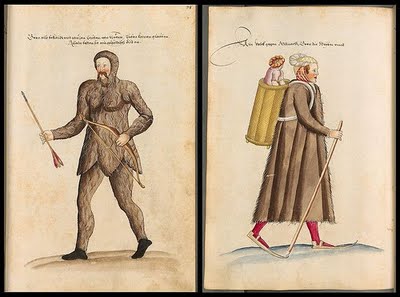
Femme du Hartz Portant un Enfant

Additionally, a baby quickly learns their role in the family, rather than allowing for the baby to become the center of the family and communities universe. Likewise, the baby learns about their culture, society, and family rhythms.. equating to a more content and well adjusted child, and more content and well-adjusted family.

"The baby passively participates in the bearer’s running, walking, laughing, talking, working, and playing. The particular activities, the pace, the inflections of the language…. and the sounds of community life form a basis for the active participation that will begin at six or eight months of age with creeping, crawling, and then walking."- Jean Liedloff, The Importance of the In Arms Phase

Throughout Time and Throughout the World
Every culture in the world has known baby wearing in some form or capacity throughout time. Depending on the climate and the mother's role in the family, baby carriers range from small pieces of fabric at the hip, stomach, or back, to full cradle boards carrier on the back.


Many carriers have multi-uses. Native American cultures can remove their cradleboards to keep baby safe and off of the ground while they tend to more arduous tasks, while sling-like carriers have been known to be looped for a hammock-bed for babies. For earlier civilizations, it made sense to carry your baby; the world was full of sickness and predators and baby wearing kept your child from becoming a target of infection, wild animals, poisonous plants, climate exposure (snow, sleet, wind, rain), and other threats to their health.


Likewise, it made it easier for women, whom the family unit relied upon heavily for day-to-day functioning, to return to work much more quickly. They were able to carry about regular chores such as cooking, cleaning, harvesting, skinning, tanning, caring for other family members, and going to market, with their child, who was dependent upon them for food and comfort, in close proximity.


In 1733, William Kent invented a wheeled baby transportation device. In the 1830's, they were brought to America, but it wasn't until the mid 1800's that 'prams' truly became popular.

www.francisfrith.com
Queen Victoria popularized the use of the Perambulator and, as with medication for birth, formula for feeding, and hospital settings for birth, it was soon seen as 'the thing' to provide for any newborn from an upstanding and affluent member of society. As such, baby wearing, breastfeeding, home birth, and natural birth was considered something of the past - something for the lower income classes.

Much to the dismay of many newborns, the die was cast and the majority of babies were no longer carried in Western cultures.


In recent years, though, baby carrying, which never went 'out of fad' in other cultures, has been making a come-back in Western culture. Ann Moore created a new carrier in 1969 after having seen African women carrying their babies. In 1981, Rayner Gardner created the ring sling for his wife and their baby.

www.thebabyhammock.com

But, it wasn't until 1985, when William and Martha Sears began baby wearing their youngest, that baby wearing began to truly gain recognition in the United States. Coincidentally, the Sears' also coined the term “babywearing”.


Unfortunately, it has been hard to break the stigmata of baby wearing being a thing for the poor. Thankfully though, with research on our side, many in the childbirth and baby community have been able to present baby wearing to the general public as a beneficial practice to provide for babies.


References (unless otherwise linked above):

11.23.2010

A Sacred Journey

"if you lay down, the baby will never come out." -Native American saying

As we come upon the Western holiday, Thanksgiving, I can't help but remember the immense culture, heritage, and people that we have mostly lost by the European people establishing colonies here. As such, and as this is a pregnancy and birth blog, I would like to highlight one of the lesser-celebrated aspects of the Native American people: their pregnancy and birth practices.

Menses/Woman
Ancient peoples, not understanding women's menstrual cycles, looked for answers in the natural world. They were astute enough to see the correlation between the lunar cycles and the cycles of a woman’s life: waxing (young and nubile); full (middle-aged and reproducing); and waning (old and wise). The bleeding time, like the lunar cycles, came cyclically and to fullness when the moon was most ripe, in many instances. Many saw menstrual blood as the origins of life and a deep source of wisdom.

Women were given special menses/birth huts in many Native American cultures. In today's society, we would see this as a shunning or disgraceful thing... Yet, in their culture, they saw this as a time to have rest from their daily chores, to bond with the women around them, and to talk about womanly things (marriage, sex, birth, childrearing, etc...). 

The land was seen as feminine: the mountains as breasts, the rivers and streams as the life flow, caves as the innermost secret (womb), and the plains as the body. Unlike much of what Hollywood would have us believe, women were regarded and revered with respect and dignity, seen as the life-giving and tribe nurturing citizens.

Pregnancy
Now I know that most of you are familiar with the Blessing Way, a Navajo ritual meant to pamper the pregnant woman, bestowing blessings and well wishes on her for her upcoming birthing time. This was accomplished by ritualistic ceremonial cleansing, grooming, gifting, and nourishing that lasts 9 days and culminates in the 'No Sleep' all night ritual where the expectant woman greets the sun the morning after.

The women of the tribe would surround the mother, rubbing her body, feeding her foods of strength and health, give her relics and talismans of strength and remembrance, and they would sing over her. The women would sing their creation song, the story of the Changing Woman.
changing woman
Some tribes believed that pregnant women should not cross their legs, wear tied neckerchiefs and should avoid sex, while most taught that pregnant women should visualize only good and healthy things and should eat pregnancy specific foods for a healthy baby; for example, the Cherokee recommended abstaining from raccoon, speckled trout, and black walnuts.

Likewise, a woman was encouraged to walk a lot in order to keep baby small enough to pass through the pelvis and to keep her hips wide and open. Women also were encouraged to wash their hands and feet daily and to stay out of too harsh of weather.

The Navajo extend these prescriptions to the father of the unborn baby as well, disallowing him to tie up animals (which was thought to tie up a baby in the womb, making labor difficult) and required that he wash his hands and feet daily.

Some women employed the use of herbs and tinctures to hasten birth, such as the Mahican concoction made of root bark or the Cherokee infusion of wild cherry bark, both of which a woman would drink to bring about contractions. Other tribes used less medicinal means such as 'scaring' baby out by threatening an elder on them.

Birth
Some tribe's required that a woman have a solitary birth (such as the Hopi), although many more accounts were that of woman-assisted births. Often, the laboring woman's mother, grandmother, or elder tribal women would assist her during her birthing, and, some tribes allowed men to witness the labor and even assist (such as the Kickapoo people).

Some gave birth within the sanctuary of the village, either in the home or in special ceremonial birth/menses buildings (such as the Inuit and Algonquian), while others (like the Mi’kmaq and Bella Koola) left the village to give birth in the woods or at the edge of a body of water.

The Navajo called their midwives 'the one who holds', the Inuit called their midwives 'the cord mother', and all, specifically the Anishinaabeg and Apache, used the term Midewiwin (our culture uses the terms 'medicine wo/man') to some degree or another.

Women walked, strutted, crawled, swayed, and leaned. They remained mobile, moving their baby down, facilitating a faster birth. The laboring woman would stand, kneel, sit, squat, hang, dance, or otherwise move her baby down; the one position that a woman never birthed in was lying down. Some Native American cultures used smoke bathes to help relax the perineum during birth. The smoke was usually created from laurel leaves burned in a small clay pot, which the mother would squat or kneel over. Some other times a secondary birth attendant would blow the smoke onto the mother's perineum.

All had different birthing devices to help women to labor down. These included ropes (to be hung by rafters or tree branches) wooden blocks to squat on or stakes pounded into the ground to press against, low birth stools to sit upon, and others. Many would require a birth fire be lit, warm water be available for poultices or medicinal teas, and oils be available for body or perineal massage. Some Native American tribes used musical gourds, songs, or chanting to help the mother during labor, while some women would make sympathy sounds to help the woman cope.

More often than naught, babies were not 'caught' by human hands, but welcomed by the earth. The short drop would act as a stimulus akin to our rough handling in today's Western cultures. Women would lay leaves under the mother's bottom and allow the baby to fall out onto the ground there. Babies were generally rubbed vigorously with either ashes or animal fats, and were bound tightly relatively soon after birth. Women were encouraged to 'discover' their babies and nurse them soon after birth.


Native American women were learned in the use of herbals and natural means of helping with labor. Black or Blue Cohosh, Red Raspberry Leaf, Partridgeberry, American Licorice, Broom Snakeweed, Buckwheat, Black Chokeberry, Smooth Sumac, Balsam Root Bark, Birth Root, Corn Smut, Wild Yam, Black Haw, Hottentot Fig, Pennyroyal, Bayberry, and Cotton Root were all employed for common childbirth issues (long labor, postpartum hemorrhage, retained placenta, etc..). The most publicized account of a birth-related Native American medicine is that of Sacagawea. As noted by Captain Lewis:
"About five O clock this evening one of the wives of Charbono was delivered of a fine boy. It is worthy of remark that this was the first child which this woman had born, and as is common in such cases her labor was tedious and the pain violent. Mr. ]essome (a Mandan interpreter) informed me that he had frequently administered a small portion of the rattle of a snake, which he assured me had never failed to produce the desired effect, that of hastening the birth of the child; having the rattle of a snake by me I gave it to him and he administered two rings of it to the woman broken in small pieces with the fingers and added to a small quantity of water. Whether this medicine was truly the cause or not I shall not undertake to determine, but I was informed that she had not taken it more then ten minutes before she brought forth, perhaps this remedy may be worthy of future experiments, but I must confess that I want faith as to it’s efficacy."


Sometimes, a birth attendant helped by providing counterpressure on the perineum, or they provided fundal pressure for prolonged labor. Other times, the mother would provide her own counterpressure to her fundus to help bring down a baby through the wrapping of a cloth or leather belt and pulling on the ends during a contraction.

Arroyo Hondo
The Native American peoples, especially the Hopi, Akimel O’odham, Tohono O'odham and Yaqui peoples, employed the use of labyrinths as a symbol of birth, rebirth and/or transition from one world to the next - Emergence. They are usually depicted with a cross in the center, representing the 4 cardinal directions, seasons of change, and sources of spirit/power. Unlike a maze, there is only one way in and out, so there is no fear of 'loosing ones self'.. Instead, the labyrinth is a means to rebirth or discover - 'finding ones self'.

The Hopi people used the labyrinth to teach the principle of Mother/Child (Tapu'at)- the Mother Earth and her relationship with her mortal child, the mortal mother and her relationship/journey to bringing forth her mortal child, and the creation story. The outer walls are the womb, while the lines of the labyrinth represent the twists and turns of life's journey and the umbilical cord, always connected either physically or spiritually with the Mother. The center symbolizes the amniotic sac, the center of life, or the beginning of all knowledge and wisdom.
Casa Grande

It is not certain that women walked labyrinths, but we do know that some drew them in the sands as meditative rites during labor.

Postpartum
The Native American women were robust, in excellent physical health, and ate a diet rich in fresh produce, seasonal foods, and devoid of outside diseases and influences (by and large). This allowed for a quick and relatively uneventful recovery from childbirth. They were often quick to return to regular duties, usually after a short respite and lying in period, although there were certain welcoming and new parent rituals that were observed. Many women would take an after-birth tonic of ergot to expel the placenta and help reduce blood loss or would use another tonic indigenous to their area.

Many Native American cultures would swaddle the mother in a warm bed over heated stones, while others require steaming in special steam huts.

Many tribe's customs required a lying-in time where women attended to the new mother and baby, banding together to take care of her house's needs, while also pampering the mother with grooming, binding, special nourishing, washing, steaming, and massaging.

The Shawnee required 10 days of lying in where the father could not see either mom or baby. The Picuris Pueblo required a 30 day lying-in, after which the baby was named. Many tribes required that the father and a helper keep with the mother for this entire time of lying-in.

An example of the extent of naming and postpartum rituals is the Hopi purification ritual. The Hopi people require a 20 day lying-in, when she must not have the sun shine on her. On the night of the 19th day, a great feast is prepared in her honor, and both she and the newborn are bathed carefully and ritualistically. The baby is rubbed with ash and the family anoints the babe while suggesting names to the father. The father, in turn, announces the sun's arrival and the grandmother of the tribe chooses the child's name and announces it as the babies face is shown the light of day for the first time. Then, everyone returns to the home to feast, except for the mother, who must go to the sweat house to complete her purification.

Many of the Native American tribes cherish the placenta and/or umbilical cord as sacred or mystical. Navajo tribes require that a baby's placenta be buried within the Sacred Four Corners of the tribe’s land, essentially binding infant to land and the tribes ancestors. Likewise, the Midewiwin traditionally performed the rites of cord cutting (Nitaawigiwin in Anishinaabeg) and naming (Waawiindaasowin in Anishinaabeg).

In many of the Plain's Tribes, the newborn was presented with a small beaded pouch that contained the remnants of their umbilical cord stump. The child would wear this throughout their lifetime and many were buried with it in their old age. This talisman was thought to bring connectedness to the tribe, the individual family unit, and serve as protection.

The Pueblo people would either bury the umbilical cord in the floor of the home (if it was a girl) or the corn field (if it was a boy). On the forth day after birth, the infant was presented to the sun, the shaman would name the child, and present the child with either an ear of corn (if it was a girl) or a flint arrow head (if it was a boy).

The Wichita people had their own customs postpartum. On the morning after the babies birth, the elder women of the tribe would take the newborn down to a stream or river, would pray for protection, strength, and health, and them bathe the babe in the stream. Other Native American tribes were said to have done similar river-immersion rituals for the first year of life for the baby.

The father had his own responsibility for ensuring babies health in Wichita culture. His first job as a new father was to make a cradling board. It was very ceremonial, with many specifics to adhere to while choosing the willow tree that would become his child's carrying place. Likewise, he had certain supplications and prayers to offer while laboring over the hewn wood to ensure his child's health.

Most tribes required that the father participate in the restrictions postpartum, or he was prescribed his own set of rituals to perform. The Tillamook people, for example, required the mother to have a 15 day lying-in time, during which the father forfeited sleep for 10 days. Likewise, many swore to abstain from intercourse for a time or went on dietary restrictions with the mother of his child.

Childcare
Some Women of the Plains would use dried buffalo manure to be ground up and used as an absorbent powder in the blankets of their babies swaddling. Then, if a baby were to wet themselves, the damp powder was shaken out and new powder was added. Other tribes practiced elimination communication (EC) and were able to move the infant into a position to relieve themselves without soiling the blankets or wrappings.

All women of all tribes carried their babies nearly exclusively for the first year. This allowed for ease of transportation, warmth, immediate and extended nursing, and as assurance that the newborn/baby would have as little chance of falling into natural harm (scrapes, nicks, falls, infection, puncture wounds, drownings, or animal attacks) as possible. Likewise, babies slept with their mothers for the same reasons.

Conclusion
I hope that you enjoyed learning a little about the beautiful rites of passage that our Native land's people have practices since time immortal. Would that we, in the midst of our technology, our busy lifestyles, and our impersonal communication practices, take a step back and consider a lesson from this group of people. Life is sacred, life should be honored, and life should be cherished through holistic care, ritual, and health care. In conclusion, there is a wonderful powerpoint/pdf presentation prepared by Ursula Knoki-Wilson, a Navajo CNM advocating for understanding and cultural tolerance in our Western-dominated culture of fear. Please take the time to watch Keeping the Sacred In Childbirth Practices.

Resources and Reading:
  • Rings L. Ancient symbols and ideas. New York: Plentium Press. 1999.
  • http://www.tidesoflife.com/placenta.htm
  • Ashley M. The book of myths and legends. Bristol: Paragon. 2000.
  • Deleary, Nicholas. "The Midewiwin, an aboriginal spiritual institution. Symbols of continuity: a native studies culture-based perspective." Carleton University MA Thesis, M.A. 1990.
  • A Native American encyclopedia: history, culture, and peoples - By Barry Pritzker, Oxford University Press
  • Mothers and daughters of invention: notes for a revised history of technology - By Autumn Stanley, Rutger's University Press, 1995
  • Engelmann, Georg Julius.

1.07.2009

The Blessingway


With all of the changes occurring in my life, and the changes that a New Year promises, I wanted to do a special post on Blessingways.

For all intents and purposes, I am planning my own Blessingway for my family this weekend. It will honor us as a family unit, while also retaining the components of a Blessingway by encouraging peace, protection, and community through a few ceremonies I have chosen that are family-friendly for our needs.

As for Blessingway's for a woman transitioning into motherhood, there are wonderful books available outlining the ins and outs, including Mother Rising and Blessingways, but here is a short outline of the history, purpose, and how to do your own.

Origins and Purpose:
The Blessing Way is 1/2 of the ceremonial song of the Navajo people. The second 1/2 is the Enemy Way. The prayers and words of the Blessing Way center around healing, creation, harmony, and peace. The song cycles retell of the Navajo creation story.


A central part of the Blessingway is the Changing Woman.

The Navajo creation story says that, in the beginning of everything, First Man and First Woman emerged from the earth. First Man and First Woman 'planned the birth' of Changing Woman' and, one day, First Man found her as a baby on a nearby mountain.

The baby matured in four days and became Changing Woman. Changing Woman created the four original Navajo clans from her body and she embodies the seasons. Her sons rid the land of dangerous monsters and created peace for the people to inhabit these lands. The teachings of the Blessingway include history and major religious practices, such as girl's puberty rite and the consecration of a family's hogan. The Blessingway is a 2-day ceremony whose purpose is to obtain peace, harmony, protection, and to help teach new generations
.

Today's Blessingway:
For an expectant Woman's Blessingway in modern society, a Blessingway is a mother- and baby-centered alternative to a baby shower. A Blessingway's purpose is to give her peace in a hectic and sometimes frightening time, help her see the support and encouragement of women around her, center her in harmony with her changing body and roles, offer her protection for the duration of her pregnancy, upcoming birth, and early motherhood, and provides and opportunity to teach her, through woman-to-woman wisdom, precious knowledge about this stage of her life.

Some components to consider while planning a Blessingway:

The number one thing to remember is that this is a celebration to honor, nurture, and uplift the woman entering motherhood, as well as welcoming a new life. As such, the space should be kept intimate, peaceful, gentle, and subtle.


Attendees should be kept small, between 5-15 guests. This should be a well-thought out list, with no invitations out of mere courtesy, but people who mean something to the honoree. These people should likewise be people who are supportive of the woman's philosophies on pregnancy, birth, and parenting. These can include mothers, sisters, close friends, best friends, midwives, doulas, and close female relatives.


The location should be a place that can feel homey or peaceful, whether it be a home or park. Likewise, the atmosphere should be peaceful; with candles, relaxing music, soft lighting, and a reminder to leave loud remarks, fearful or negative remarks and stories, as well as pagers and phones all at the door.


Food served at the Blessingway can be something that reminds a woman of her upbringing or heritage, or it can be food specific tonourishing the woman body, mind, and spirit.


And finally, ceremonies. Ceremonies are the Blessingway's version of a baby shower game. These ceremonies sole intent and purpose are to strengthen and uplift the mother-to-be. As there are a number to choose from, finding out what a mom's belief system will allow for, along with what her personal comfort level will allow for will help the coordinator to know what will provide the most nurturing experience for the woman.

  • Birthing Beads - the coordinator can either collect beads that are meaningful and specific or she can request that each guest bring a special bead to string on a necklace or bracelet for the mother to wear until labor commences or through to the time that she has birthed. This ceremony can be coordinated by having all of the women sit in a circle and pass a length of cord around, hand to hand. At each turn, the guests add their bead or beads (can even suggest a bead for each birth a guest has had). When it reaches full circle to mom, she strings the final bead to represent her birth or child(ren) and then it is tied on mother. The birthing beads/jewelry symoblizes support and strength of the birthing women who surround, support, and strengthen her through shared experiences and history.
  • Cord of Red - Similarly, the coordinator can continue the previous ceremony by preparing a ball of red string, hemp, or cord. With this cord, the coordinator goes from guest to guest, looping one wrist of each guest. When all are connected, the coordinator can talk of how your experiences support and uphold one another in a web of womanhood (Christian's can talk about the cord of three strands and even incorporate it). Explain how this unites all of you, along with all that have come before you. Then the coordinator cuts the cord, leaving enough length to tie the ends at each guests wrist into a bracelet. At this time, suggest to the women to continue to wear their simple length of cord as a reminder to pray for the birthing mother, and to continue to uphold her in strength and encouragement.
    Henna - The mother's belly can be hennaed by a professional. This is a good ceremony to couple with W2WW (see next)
    Woman to Woman Wisdom - bringing special stationary and envelopes, the coordinator can ask each guest to speak wisdom, a wish, a prayer, or advice unto the mother after taking time to write it on the paper and sealing it in the envelope.
  • Candles/The Lighting - a great 'party favor' for the guests is candles. Guests are given candles with instructions to light the candle when they are notified that the woman-of-honor has started her birthing time and to leave it lit until the baby arrives. Likewise, mom can be given a larger pillar candle for the same reason.
    Washing of the Feet - the woman-of-honor can recieve a foot washing and massage (be careful to avoid pregnancy 'hot-spots'). She can then keep any left over massage oils and soaks for later during her birthing time. This can be done by another woman of honor; either the mother of the mother-to-be, the midwife, or doula. This is another good ceremony to couple with W2WW.
  • Belly Casting - a more modern advent, it is still memorable. This can be done ahead of time by a professional or a smaller, more intimate group and allowed to dry for a few days before the Blessingway. During the Blessingway, the belly cast can be pained and decorated by the guests.
  • Quilting - Each guest can be given instructions to prepare a certain sized quilting square prior to the party which either embodies a character trait of mom, a blessing for baby and/or mom, or prayer or memory that would carry sentimental or personal value for mom. The quilt can then either be assembled at the Blessingway and presented to mom, before the Blessingway and presented to mom during the event, or after the Blessingway and presented to her after baby is born.
  • Songs and Stories - If a close female has a singing voice, a song can be prepared ahead of time and sand to the mother. Likewise, a story or legend appropriate for the setting and circumstances can be recited.
  • Nurture Basket - a Moses Basket or other basket can be set at the feet of the woman-of-honor. Then, in leiu of baby shower presents, the guests can bring items to place in the basket that will nurture and strengthen the woman-of-honor. These gifts can be massage oils, gift certificates for pedicures or massages, candles, photo albums or scrapbooks, or other meaningful gifts.

Now that you know what a Blessingway is and what it represents, perhaps some of you will have the desire to request one for your next (this) pregnancy, ask a mother-to-be if she would like to have one, or at least pique your interest into considering it further.

And that brings me to the last reason for this post. In honor of my families changes, the New Year's changes, and the life-changing journey that so many women will be embark upon in 2009, I would like to announce to you the Bellies and Babies Blessingway Giveaway!

Check in tomorrow for details...

LinkWithin

Related Posts Plugin for WordPress, Blogger...

Total Pageviews